New Hope For Sex Changes!
Welcome to the FIRST SEX CHANGE USA NEWSLETTER. I'll keep it short and sweet.
This week we turn the clock back to the 1950s/1960s: the dawn of the supermarket tabloid as we know it today.
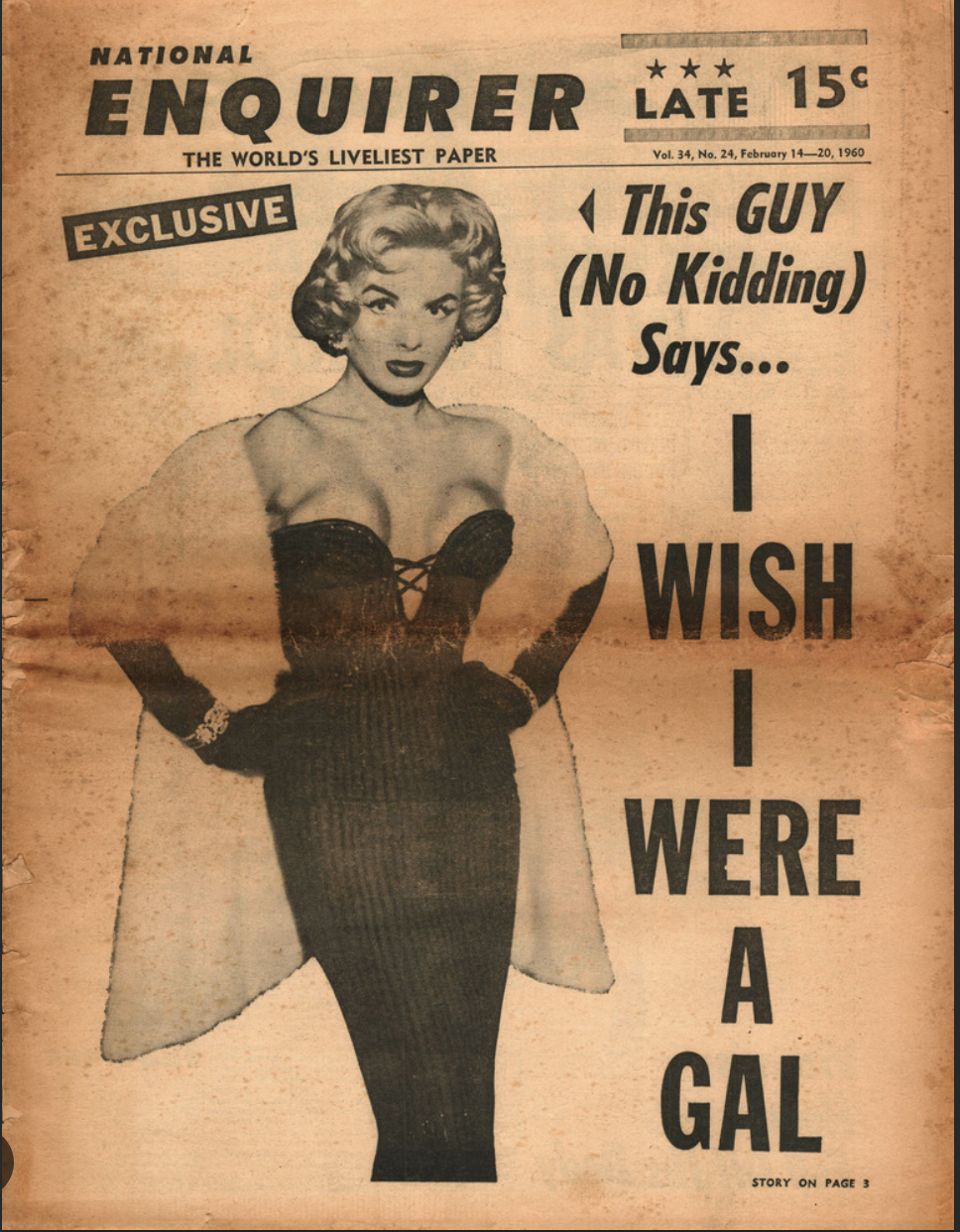
The 1950s/1960s tabloid scene was almost exclusively celebrity focused. A feature article about an "everyday person" was a rare occurrence, and if it did show up it was usually in the form of gruesome crime scene photos. To the tabloids of the 1950s, the only interesting "normal guy" was a dead one.
This celebrity obsession also extended to its coverage of the trans community. Names like Christine Jorgensen and Coccinelle were the tabloid-reading publics only window into trans life. After Jorgensen's highly publicized surgery, we see trans coverage extend to a general fascination about "the surgery". You'll notice the tone of the article below is a clunky mix of scientific writing and lurid fascination around bottom surgery.
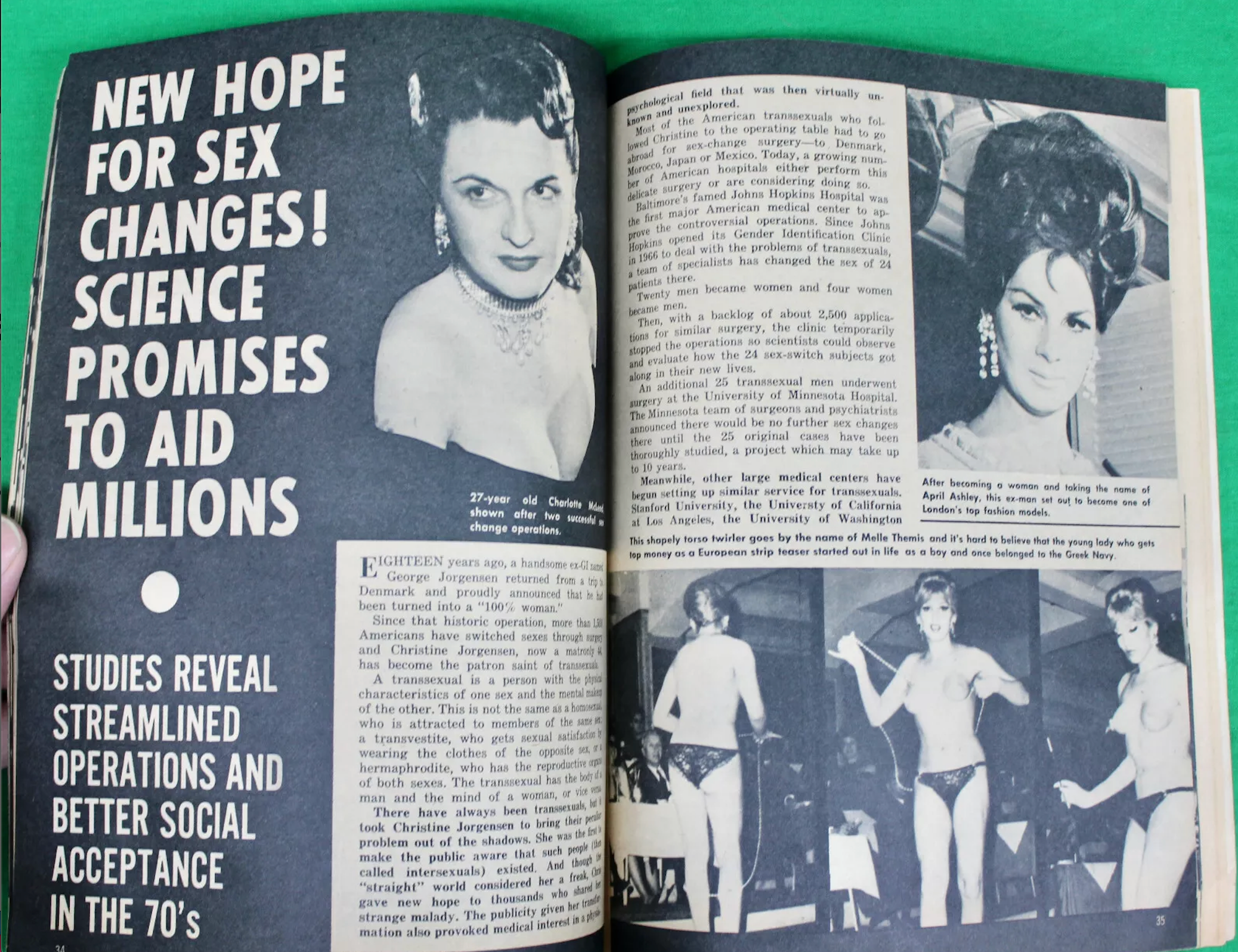
Sex magazines of the era, as well as exploitation films, often used the framing of popular science or psychology as a way to get lurid subjects in front of the viewers eyes and past censors. A great example is this clip from Ed Wood's transsexual B-Movie classic, Glen or Glenda where a police inspector and psychologist awkwardly discuss being trans in medical and psychological terms.
Another popular trans-tabloid trope from this era was the salacious "tell all" first person account. A common Confidential Magazine headline went something like "XYZ SCANDALOUS THING- IN MY OWN WORDS". Topics could include visits to secret underground feminist sex clubs, life as a go-go dancer in Vegas, or a chance encounter with a dirty, no good communist. Naturally, first person gender transition accounts fit right in. On one hand, its not great that trans women were paired with a handful of other subjects that were coded as risqué and negative. On the other, its genuinely remarkable to me that any newspaper in the mid 1950s would be letting a trans woman write about her experience in her own words. The surviving articles I've been able to find are wonderful resources into what trans life was like in the 1950s.
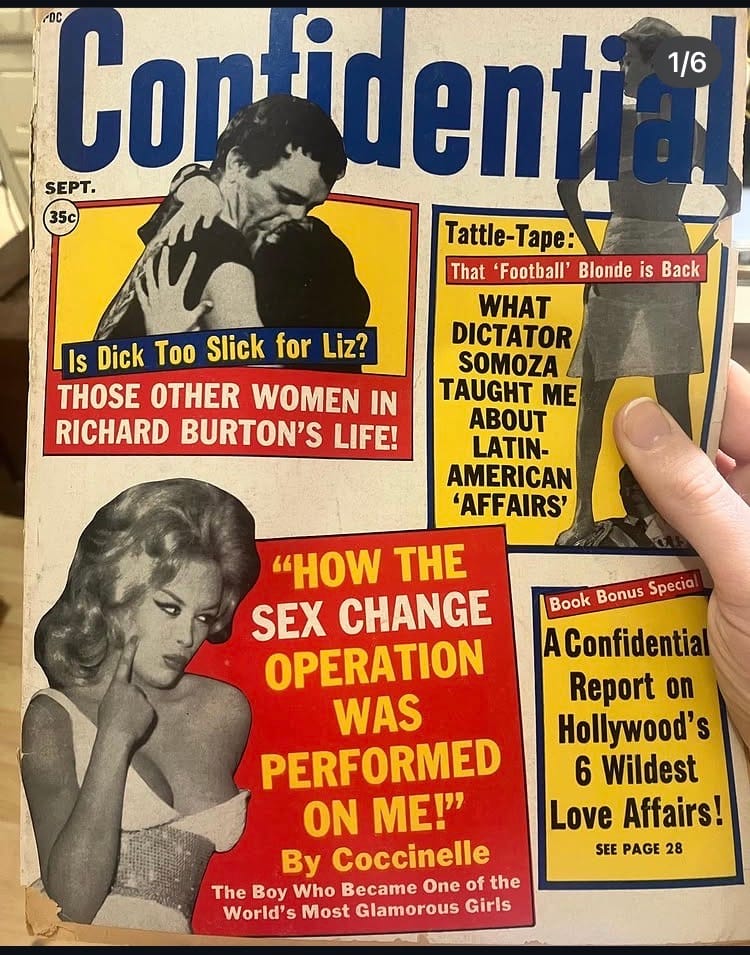
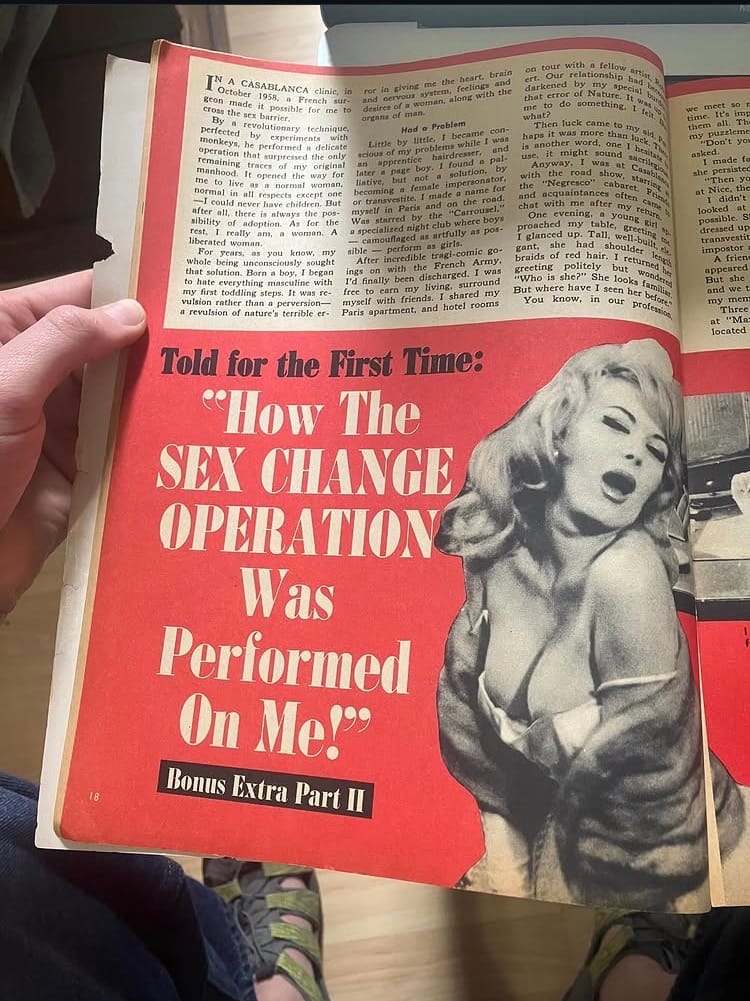
As gossipy and salacious as the headlines and photos make it out to be, these stories often had a lot of heart, and the editors were more than willing to let these women bare their souls about the highs and lows of their transition journeys.
Well, thats all for now folks!